 |
 |
| |
|
|
| |
 |
|
|
= May 2026 = |
|
|
|
Ichiko Aoba Concert Review
Fabiano Do
Nascimento & Vittor Santos Orquestra
Thought Bubble
The Tea Club
Circle Bros
Flower Girl |
|
|
|
|
|
|
|
|
|
|
|
|
|
|
|
|
|
Home |
CONCERT REVIEW – ICHIKO AOBA
Walt Disney Concert Hall, Los Angeles
24 April 2026
Japanese songstress
Ichiko Aoba has been a darling around these
parts for some time. Her lovely folksy melodies,
note-perfect classical guitar playing and intimate,
crystalline voice have a way of making you ride on a
carpet of air and touching your soul. We loved her
seventh album,
Windswept Adan, her breakthrough in 2020. It
was also where she found her current style. 2025’s
magnificent follow-up
Luminescent Creatures continued her
exploration of underwater life, and sealed her as
not only one of our favorites, but a worldwide
concert phenomenon.
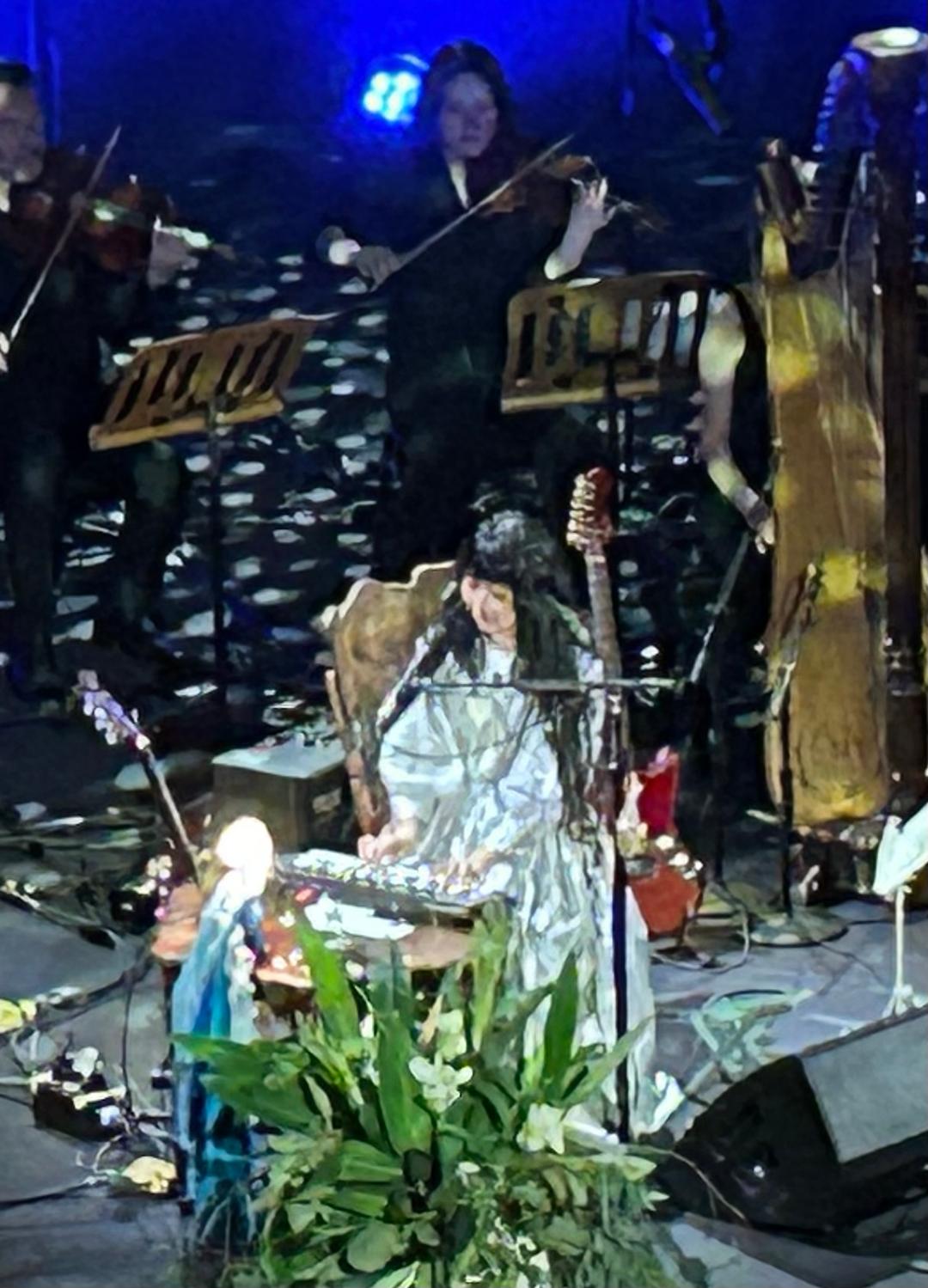
The concert took place at the beautiful Walt Disney
Concert Hall in Los Angeles. The Frank Gehry-designed
wonder is the home of the LA Philharmonic. It was a
packed house, with many Japanese-Americans in the
audience. Ichiko looked resplendent in a flowing
silver dress. Mostly she played her small body
Yamaha classical nylon-string guitar that she’s
played since she was 15. On a few songs she played a
compact Yamaha synthesizer for soundscapes, and she
switched to an electric guitar for a couple of
songs.
She was backed by the 12 Ensemble, the excellent
European string orchestra. It featured violins,
viola, cello, bass, piano, harp, flute, and more.
Although Ichiko can perform brilliantly solo with
just her guitar and voice, the 12 Ensemble brought
her songs to life in high definition; they made them
pop. This is the same outfit who backed her on her
2023 live album
Ichiko Aoba with 12 Ensemble
(Live at Milton Court). In fact, if you want to know
what this concert sounded like, check out that
album, as it features many of the same songs. The
addition of the 12 Ensemble and their exquisite,
sensitive arrangements of her songs gave the sound a
fullness and a feel of the great impressionistic
composers like Claude Debussy and Erik Satie or even
Robert Kirby. The arranger played piano during the
performance, if I understood the ensemble
introductions correctly.
Ichiko played songs from across her catalogue, but
unsurprisingly featured many tracks from both
Windswept Adan and Luminescent Creatures. She played
a fingerstyle guitar and her soothing voice at times
felt so intimate and personal as if she was singing
softly to herself. The audience was reserved and
respectful for much of the performance. I like to
think they were under the spell she casts on you
with her ethereal music. But at the conclusion they
rose to their feet and roared their approval and
called for encores, which Ichiko did twice.
I was a little surprised that she occasionally spoke
to the audience in halting English, as I didn’t
think she spoke any of the language. It was much
appreciated. Overall, this was a wonderful
performance by Ichiko of her tender songs. She
brings you into another world, a graceful world
where you can swim with her as she glides with her
beloved sea creatures.
(Mark Feingold) |
|
|

Home |
FABIANO DO
NASCIMENTO & VITTOR SANTOS ORQUESTRA - VILA
(LP/CD/Digital from
Far Out Recordings)
This lush album
features the sprightly finger picking of the
virtuoso Brazilian guitarist Fabiano do Nascimento,
who now lives in Los Angeles, paired with the
sweeping strings and playful horns of the Vittor
Santos Orquestra. Nascimento is prolific – he’s
released sixteen albums since 2011, with ten of them
just since 2023. He always challenges himself,
frequently changing styles among folk music, jazz,
Afro-samba, choro, electronica and experimental
music. As part of his expansive artistic growth,
this album showcases his melodic compositions and
guitar playing - never flashy, but always nimble -
and Vittor Santos Orquestra’s vivid, relaxing
atmospherics.
Rather than have his
guitar deservedly out front in the mix, Nascimento
chooses to use it to introduce most of the tracks,
then fall back into the middle of the soundfield. It
almost bathes and swims like a dolphin, playfully
popping up now and then in the middle of the sea of
the orchestra. All the tracks are beautiful, but
I’ll give one example: On 'Tema Em Harmônicos,'
Nascimento begins with those guitar harmonics from
the title, then bobs and weaves his way through the
jazzy melody. The song is a breezy, carefree tune
that will remind you of warm summer days, sailboats
in the distance and the smell of fresh laundry.
Vittor Santos is a trombonist, and matches
Nascimento’s guitar measure for measure with a
relaxing solo in the latter part of the track. It’s
exquisite.
Ironically, in a bonus
track on the CD, Nascimento includes a version of 'Tema
Em Harmônicos' without the orchestra. Stripped of
the strings and horns, Nascimento’s guitar is
finally the main instrument out front among a bass
and some lively percussion. It’s like a different
track altogether although it’s the same piece, just
with some clever snipping at the mixing desk. Given
a chance to breathe, Nascimento’s guitar work is
highlighted for the brilliance it is. It makes one
wonder what if the whole album was released that
way? But the orchestra definitely embraces the
listener, and by embrace I do mean it feels like one
big hug surrounding you.
When I was a young
sprite trying to learn more about jazz and soak up
as much as I could, I bought an album in the record
bin in the shop by the great saxophone player
Coleman Hawkins. It turned out all the tracks were
backed by an orchestra, an easy listening affair. I
had unwittingly bought the one outlier in Hawkins’
catalogue that sounded nothing like his usual music,
which took me a long time to realize. This isn’t
quite the same analogy, but Vila DOES sound
different than Nascimento’s other releases, if
nothing else because he’s a musical shape shifter,
with his virtuoso guitar playing being the one
constant.
Another favorite track
is 'Floresta Dos Sonhos.' The six-minute song has an
up-and-down repeating rhythm for both the orchestra
and Nascimento’s guitar. More than most of the other
tracks, you can hear Nascimento’s rapid finger
picking driving the song and the orchestra, and he
even has a brief stanza in the middle where it’s
just his guitar unadorned. It’s gorgeous, but
somehow you welcome back the orchestra to pick up
their gentle accompaniment.
If possible, listen to
Vila with good speakers or headphones. There’s so
much to pick up with repeated listenings. For
instance, 'Prelude 5' is another track where
Nascimento’s guitar is more out front and the
interplay with the orchestra is fascinating.
Nascimento’s fingers never stop, almost flamenco
style, while the orchestral arrangement perfectly
blends with it, coming up, down and all around his
playing. Vila is gentle, but still manages to
challenge the listener.
(Mark Feingold)
|
|
|
|

Home
|
THOUGHT BUBBLE - WHO'S TO SAY
(CD/DL
from
Moolakii Club Audio Interface)
It's been several years (and releases) since we
reviewed Thought Bubble's
Universe Zero album, so we're glad to rejoin
their significant following and present the eighth
album from the Shropshire alt-electronic trio of
Chris Cordwell (synths), Nick Raybould (percussion),
and Peter Gelf (vocals). A krautockin' groove
permeates opener 'Let The Light' with Gelf's jittery
vocals snaking through Raybould's percussive cushion
and Cordwell's synths hovering in the air - very
much in the mould of the Damo-fronted Can.
There's an
improvisational sense of fun and mayhem in 'Small
Things and Sandwiches' which reminds me of some
coffee shop gathering of beatniks in '60s San
Francisco or New York. Musically akin to the Zappa/Beefheart
school of avant garde anti-pop, it'll take a few
listens to settle into Thought Bubble's musical
universe, but fans of several of Terrastock's difficult
listening acts like 50 Foot Hose, Spaceheads,
Oneida, and Urdog along with challenging efforts
from Faust, et. al. will be right at home.
'Lightfoot'
moves in poppier direction with a catchy Vince
Clarke-style synth riff almost childlike in its
simplicity, yet something that remains long after
the album ends. In fact, the album actually ends
with a 'Lightfoot' reprise, 'A Man Split In Two', a
meaner, hurricane-force gale revisit complete with
spooky haunted house bleeps that's twice as long and
hypnotically mesmerising.
Soft Machine (and more
specifically Ayers' and Wyatt's solo output) eases
into my mind while I'm enjoying the vibrating synth
washes and Gelf's vocal round of 'I'll Buy You
Oranges' and I also got a kick out of the satirical
lyrics and vocal exercises of 'Your Call' in the
fine tradition of Moondog.
(Jeff Penczak)
|
Home |
THE TEA
CLUB - CHASM
(Download
available from the band)
The sixth album from
Philadelphia's progressive art rockers was five
years in the making during which the band struggled
through the cycle of "life, death and rebirth," all
of which are reflected in Chasm. Driven
by the dual vocals and harmonies of guitarist
brothers Daniel and Patrick McGowan, the songs are
punctuated by Daniel Monda's strident drumming,
Jamie Wolf's bass and cello, and Joseph Dorsey's
keyboards. Frequent mood swings, melodic
about-faces, and syncopated time signatures remind
us of vintage Crimson, Genesis, and Yes, yet there
is room for melancholic reflection in the tender
breaks from the opening salvos' aggressive pomp in
tracks like 'Quicksand,' 'Ear On Arm,' and 'The Bell
Ringer,' the latter delivering a pleasant Kansas
vibe.
Side two kicks off
with the spiritually enveloping, Gregorian
chant-with-operatic-overtones of 'A Small And
Passing Thing' while 'Altered One' is a strong "hit
single" candidate that should catch the ears of new
listeners and encourage a quick visit to the back
catalogue. 'Vineyard' changes its mind halfway
through and we're treated to two sides of the
emotional coin: a sneaky, stalking beginning
bursting into U2-styled emotional bombast. 'Sonata'
adds a nice classical touch, and 'The Lunar Eclipse'
floats us down gently to Earth following the highs
and lows of life with The Tea Club.
(Jeff Penczak)
|
Home
|
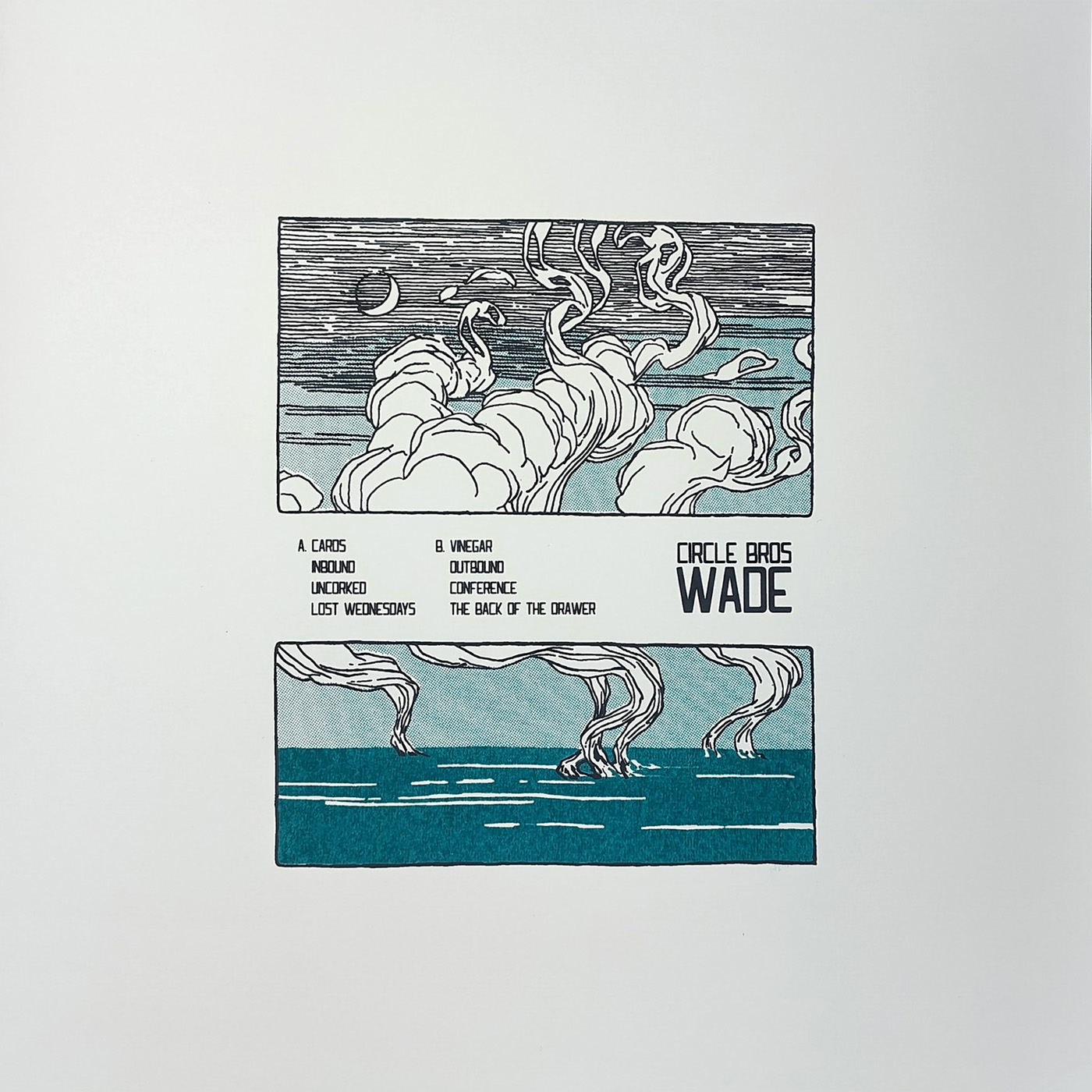
CIRCLE BROS - WADE
(LP from
Morc Records)
Followers of
improvised ambient drone psych from the likes of
Aarktica, Flying Saucer Attack, Labradford, Stars Of
The Lid, Roy Montgomery, et.al. are in for a treat
with this welcome return from Morc Records founder
Wim Lecluyse, the prolific one-mand band from Gent,
Blegium. His first release since the 2021 "Waves+Peaks"
EP on Vrystaete, Wade continues to explore lo-fi,
post-folk textures, but with more accessible
touchstones like Arab Strap and Jessica Bailiff that
are fodder for snorecore enthusiasts like me.
'Cards' opens
with a repetitive motif that lifts the spirits while
leaving room for introspective navelgazing and
contemplative ruminations. Echoed vocals do not
necessarily promote a narrative as act like another
counterpoint sound to the hypnotic guitar backing.
'Inbound' could be the soundtrack for a lost star
approaching Earth, ricocheting through space with no
predetermined destination, but is still ominously
hurtling in our direction. There's a sense that the
other shoe is going to drop any second - or a
catastrophic disaster is imminent, but no one knows
exactly where or when.
'Uncorked' is quite a
twangy Western-tinged cinematic offering - imagine a
Sergio Leone soundtrack filled with a collaboration
between Morricone and Badalamenti with the voice of
doom making sure you're paying attention. In this
regard, influences from Australian experimental trio
HTRK also seep through the desolate soundscapes.
The hallucinatory
drone 'Outbound' tricks the mind and ear into
thinking it's hearing sounds that may not be "there"
or are after effects of a song that ended minutes
ago. Other repetitive riffs lull us into a sense of
calm while sinister forces whisper fairly
indistinguishable phonetics into our brain. We
strain to determine meaning from the "lyrics" while
the background atmospherics and ambient sounds
assure us all is safe, or in Lecluyse's description
- "gentle and focused." You've been warned!
We end in 'The Back Of
The Drawer' where we all know discarded ephemera can
come back to haunt us. Where did that come from? Why
did I put that here and forget about it? A
high-pitched squeal eats into our mind, painful yet
alluringly soothing. The night after listening to
Wade I awoke to sounds that were eerily
unidentifiable. Was it my tinnitus or were they
really there. Wade will stay with you long
after you've moved on to the rest of your life.
Days, weeks later you'll still wonder where that
noise in your head came from. Circle Bros is back in
town and Lecluyse is determined to stick around
awhile. Let's hope it's not another five years
before we're reprieved with his next release!
(Jeff Penczak)
|

Home |
FLOWER
GIRL - LUX
LP on
Circus Peanut Records)
We've been fans of
this predominantly instrumental Philadelphia
psychedelic trio for over a decade, although the
band have been frying brains and rearranging
synapses for over 20 years. Hints of some of our
favourite subgenres permeate their music, from
krautrock and space rock to Japanese psych and
Indian classical music. Self-confessed influences
include Terrastock favourites Acid Mothers Temple,
while Hawkwind, Circle, and Grateful Dead frequently
have a look-in. I also hear pleasant reminders of
fellow Philadelphians Bardo Pond's collaboration
with Roy Montgomery, Hash Jar Tempo, so strap on
your safety visits and enjoy the ride.
I'm not sure who 'Dawn
Pellagio' is, but she should be proud to get a song
named after her. It's a gentle introduction to the
album, starts-and-stops inserted to keep your
attention, with the band (John Malloy on guitar,
sitar, synths and loops, Rick Wright - not that one
- carefully filling in the empty spaces on bass and
Jeremy Sustare providing solid timekeeping in the
back row) wrapped as tight as a kettle drum.
Flickering guitars cascade like waterfalls to create
a soft landing fro mther pre-flyte tensions. And
we're off and running.
I believe 'Jusiege' is
a Japanese sutra frequently chanted by the Buddhist
Jodo sects. Flower Girl incorporate "voices, if not
actual singing" into the mix behind Malloy's
paint-peeling solos that feel like a jolt of
electricity racing through your body. An overall
mystical experience.
'House of Shalimar'
continues the Eastern-flavoured vibe with sitar,
gong, percussion, and Denis Malloy's flute
smoke-ringing through your well-prepared incense.
There are even a few recogniseable riffs that John
sneaks in to tease the grey matter while the music
creates a warm, hazy glow.
The 13-minute
centrepiece 'Moto-Myrror Maid' is another guitar
extravaganza in the mould of Nick Saloman, Kawabata
Makoto, and the Gibbons' brothers' lengthier
workouts, but I like the about-face a third of the
way through that sparkles like a rainbow on a
glistening pond - percussive effects, tinkling
guitars, galloping drums - and sends us off into
another universe of third eye revelations, navel
gazing rumination, and peaceful internal calm,
until...all hell breaks loose for a finale of
fireworks, explosive wall-rattling guitars,
throbbing bass and maniacal skin pounding that will
clear the grey matter spiderwebs like a 21st century
'Maggot Brain.'
The band break out the
synths and loops for a swirling finale 'Tear 'N
Tell' which won't have you donning your dancing
shoes but coming to terms with everyday
interruptions of a peaceful lifestyle via Malloy's
sharply defined notes a la David Gilmour, Robert
Smith, Vini Reilly, et. al. An unidentified
(Japanese?) voice disturbs the reverie long enough
to bring you back to reality, forcing your mind to
balance the musical/vocal counterpoint and answer
that nagging question "Where the hell am I?" Flower
Girl have taken you on another voyage to explore
your inner mind, contemplate the universe, or just
sit back and enjoy the trip.
(Jeff Penczak) |
|
|
|
|
|
|
|
 |
|